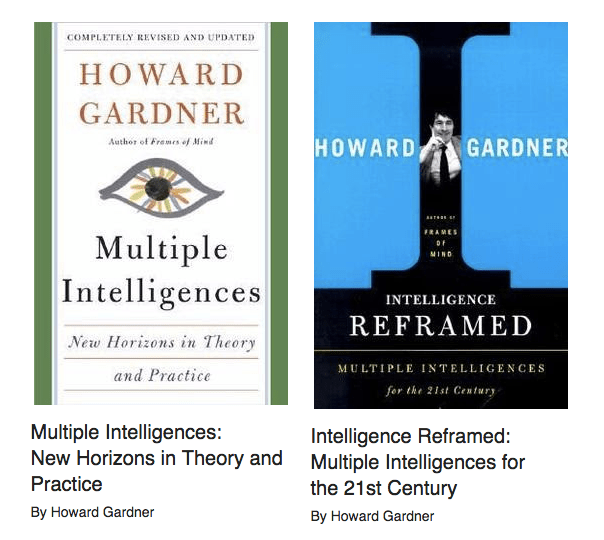
Maybe you have heard of the Multiple Intelligences theory when it gained popularity in the 90s and since then students have been categorized based on the characteristics of each intelligence found in Howard Gardner’s books, Frames of Mind: The Theory of Multiple Intelligences (1983) and Multiple Intelligences: New Horizons in Theory and Practice (1993).His theory had a major impact on education, but did you know it could be used in business and daily life?
Multiple Intelligences are the different ways in which humans understand the world. These are often confused with learning styles, but where learning styles are considered to be lifelong restrictions, multiple intelligences can be developed and strengthened over time. Conflating intelligences with other desired outcomes is a practice that, according to Howard Gardner, “proves particularly notorious when it comes to the personal intelligences. Interpersonal intelligence, the understanding of other people, is often distorted as a playground for extroverts. Intrapersonal intelligence, the understanding of oneself, is often misused as a rationale for self-esteem programs or is attributed to introverts. These distortions and misapplications suggest a shallow (or nonexistent) understanding of my writings on intelligence.”
Multiple Intelligences is about problem-solving and are used every day. The blogs with the tips and tricks of getting along with coworkers or nailing that next interview will have solutions to interpersonal intelligence problems. Singing a School House Rock song during a test or remembering a jingle from 20 years ago are both using the musical-rhythmic intelligence. The intelligences exist in everyone, they just may not manifest in expected ways.
Considering multiple intelligences when designing your lessons can help students produce high-quality work. “The theory of multiple intelligences provides an opportunity to transcend mere variation and selection. It is possible to examine a topic in detail, to determine which intelligences, which analogies, and which examples are most likely both to capture important aspects of the topic and to reach a significant number of students” (Gardner, 176). You can do this by asking questions about how to approach a concept from different angles. When structuring your questions, using the phrase “how might we” can you give you a new perspective on the situation. How might we questions allow room for collaboration, brainstorming, and an opportunity for ownership of the question which spurs the questioner to find an answer.
“Everything is open to question, especially the things we thought we already knew.” – William Deresiewicz, A More Beautiful Question
Free Books Available:
If you are interested in reading some of the books mentioned in this post, please email me at channell.walker@pepperdine.edu to get a free copy.

 Channell Walker